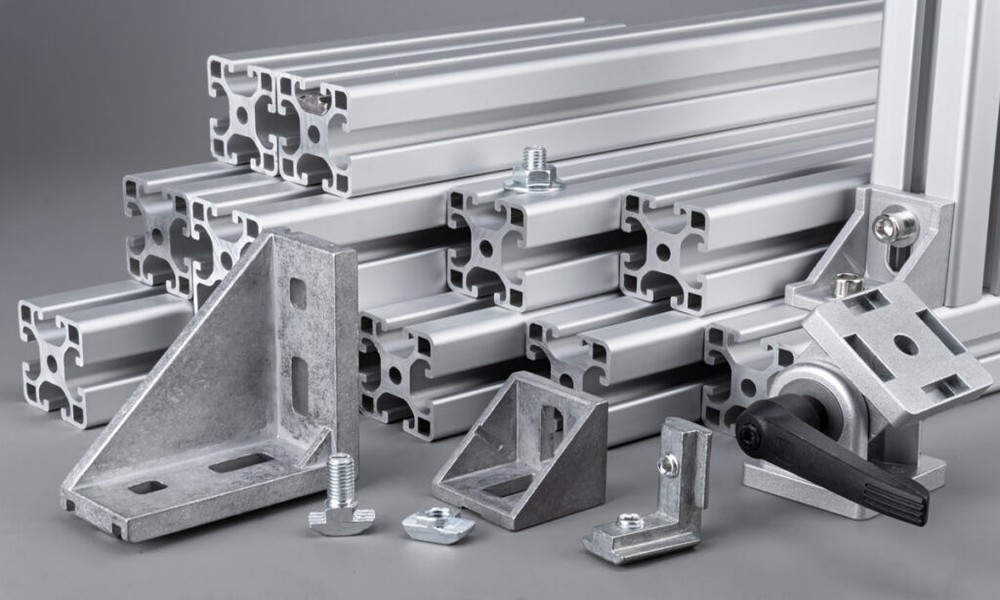
Modular automation frames have become essential in UK manufacturing, engineering, and laboratory environments. They provide the structure for conveyor systems, robotics, testing rigs, and assembly lines, offering flexibility and durability that traditional welded frames cannot match. Aluminium profile systems, particularly T‑slot profiles, are widely used for these applications due to their strength, lightweight construction, and ease of modification.
Understanding how to design modular automation frames effectively ensures that systems are robust, adaptable, and cost-efficient.
Why Choose Aluminium Profiles for Automation Frames?
Aluminium profiles offer several advantages in automation design:
- Lightweight yet strong: Supports equipment without excessive load on floors or mounts.
- Modular design: Frames can be adjusted, expanded, or reconfigured as production needs change.
- Quick assembly: Standard connectors and brackets simplify construction and reduce downtime.
- Corrosion resistance: Ideal for environments with exposure to humidity or chemicals.
These qualities make aluminium profiles the preferred choice for UK industries looking for flexible and long lasting frame solutions.
Key Tips for Designing Modular Automation Frames
1. Plan for Load and Stress
Evaluate the weight and stress points in your frame design. Consider the load of machinery, conveyors, or robotic arms, and ensure profiles of suitable dimensions and strength are used in high-stress areas.
2. Prioritise Modularity
Design frames that allow sections to be added, removed, or repositioned. This makes future upgrades, maintenance, or workflow changes far easier and more cost-effective.
3. Use the Right Accessories
T‑slot profiles are compatible with a wide range of brackets, connectors, and fasteners. Choosing the right accessories ensures stability while maintaining the flexibility of the frame.
4. Plan for Cable Management and Safety
Integrate channels or mounts for cables, sensors, and safety devices early in the design. This keeps the frame organised, reduces hazards, and allows easy access for maintenance.
5. Consider Ergonomics and Accessibility
Automation frames often require human interaction for monitoring or maintenance. Ensure that panels, controls, and working surfaces are accessible without compromising safety or performance.
6. Test Before Full Implementation
If possible, create a small-scale prototype or digital 3D model to test assembly, weight distribution, and integration of accessories before building the full frame.
Applications of Modular Automation Frames
- Conveyor and sorting systems – flexible frames that adapt to changing product sizes and workflows.
- Robotic assembly rigs – strong and precise support structures for robotic arms and automation tools.
- Testing and inspection setups – frames that can be modified to accommodate different devices or test samples.
- Lab and industrial equipment support – modular benches and enclosures for machinery and tools.
Aluminium profile frames enable rapid adaptation to new equipment or production processes, providing a competitive advantage in fast-changing industries.
Frequently Asked Questions
Can aluminium profiles handle heavy machinery loads?
Yes. By selecting the appropriate profile size and reinforcing key sections, frames can support significant weight safely.
Is it difficult to modify a frame after assembly?
No. T‑slot profiles allow for easy modification using standard connectors and brackets without welding or specialised tools.
Are aluminium automation frames suitable for industrial environments?
Absolutely. Aluminium’s strength, corrosion resistance, and modularity make it ideal for both lab and industrial settings.
Do modular frames require expert design software?
While CAD software can help with precision and planning, many basic frames can be designed using measurements, templates, and manufacturer guidelines.
Final Thoughts
Designing modular automation frames with aluminium profiles allows UK businesses to create strong, adaptable, and efficient structures for a wide range of applications.
By considering load requirements, modularity, accessory integration, and ergonomics, engineers and designers can build frames that are safe, functional, and future proof. Aluminium profiles provide the flexibility and durability necessary to support evolving automation needs.